The Triumphant Re-Launch of A Storied Career

Yeah, yeah, I know I’ve done this before … a burst of blogging and then a long silence. This time I have fewer other distractions. No full-time job. I’m committed to being a full-time blogger and growing A Storied Career. Hope you’ll come along for the ride.

For the first month or so, I’ll be catching up on stuff I’ve wanted to post during my long absence, so dedicated story fans may see material they already know about – though I hope you’ll find it presented in a fresh format.

Use Your Blog as a Resume: Part I

Editor’s note: This article is the first of two parts. Part II provides tips and examples for using a blog as a resume.

Through the use of a variety of online tools — blogs, wikis, social-networking sites, portfolios, podcasts, Youtube videos, and more — individuals, especially younger people, are socially constructing their identities in ways unimagined a dozen or so years ago.

Where a dedicated careerist of old constructed a job-seeking identity through a resume and a few other printed materials disseminated to audiences that seem puny by today’s standards, postmillennial upwardly mobile types are establishing their career identities to vast global audiences using the tools of the so-called Web 2.0, defined in part by Web guru Tim O’Reilly as comprising an “architecture of participation.” The concept of Web 2.0 “suggests that everyone … can and should use digital media to express and realize themselves,” writes Andrew Keen in The Daily Standard.

And recruiters are responding. Case in point is the notion of the blog as a replacement or accompaniment for a resume. Sarah E. Needleman reported on the Career Journal site that Ryan Loken, a Wal-Mart Stores, Inc., recruitment manager, had filled an estimated 125 corporate jobs by reading blogs. Well-known recruiting blogger Heather Hamilton, a staffing manager at Microsoft, noted in her blog that “recruiters are searching blogs specifically for resumes.” Recruiters who responded to blog postings on the topic of blogs as replacements for resumes made such comments as:

“We’ve hired two people fresh out of college in the past four months that we found through their blogs — one didn’t even have a formal resume. Frankly, he didn’t need one. A blog trumps a resume every single time.”

“Our stance is that blogging is important — at least in our medium — and we are developing a strategy around it. We are conducting a search for a Marketing Director right now — if an applicant doesn’t blog, or at least contribute heavily, it’s fair to say that we are going to pass them by.”

The concept of the blog as resume has been the subject of several articles in 2006 and 2007, most of them, appropriately, blog postings with numerous follow-up comments by blog readers and posters. Dave Lefkow’s 2006 entry on ERE.net (a site for executive recruiters) entitled My Blog is My Resume (registration may be required to see the full article), talks about “the changing dynamics of the Web’s second generation.” His article’s implications for job-seekers are apparent in these excerpts:

Privacy is no longer an issue. This generation seems quite comfortable

publishing all of the gory details of their lives online. Some of these details will shock you. Get used to workers who are perfectly functioning members of the work world, but who perhaps make decisions in their personal lives that you find appalling.

Many job seekers, growing up in the level playing field that is the innovation economy, will often expect to be judged by their ideas, not their experience. Resumes will become irrelevant (or at best, a meaningless formality that describes your work history, not who you are).

Why are some employers and recruiters coming to see tools like blogs as more revealing and authentic than resumes? One blog commenter explains: “Think about it — a resume is one or two pages, of flat, static information. A blog is an interactive space where you can

really see inside of a prospect’s head — their ability to innovate, think, and communicate. You not only find out what they’ve done for work, but what their passions are, and frankly if they’re the type of person you think would fit into your organization.”

Another commenter noted that the new generation craves personal contact. A blog provides a way to move beyond a resume’s “one to two pages of flat, static information” and create a sense of personal contact. When you reader a blogger’s work, you often have a sense of

knowing him or her even though you’ve never met.

Lefkow’s blog entry and indeed the entire discussion of the idea of blogs as replacements for resumes seems to have originated with an entry on Scobleizer, the blog of Robert Scoble, who noted that he hadn’t needed a resume to get his most recent job and implied that he didn’t expect to need one in the future. Scoble also asserted that his Wikipedia

entry takes the place of a resume. This brief posting elicited 59 comments. Similarly, Adam Darowski in his blog, Traces of Inspiration, submitted an entry entitled The Blog is the New Resume, and Joshua Porter followed with an identically titled posting on his blog, Bokardo, both of which generated extensive comments that provide glimpses into a future in which blogs — or other tools — might take the place of resumes ­– or not.

Darowski wrote, “Wouldn’t it be nice to have more than a vague bulleted list of accomplishments before actually picking up the phone to call the person? There is. There’s blogging. Blogging is the perfect way for a candidate to give an employer a more detailed sales pitch — to show they can ‘talk the talk’ (as opposed to just fill a resume with buzzwords).”

Porter added a five-point list of the advantages blogs have over resumes, including a blog’s ability to represent the individual, its archival quality, and the blogger’s editorial control over it. One of his commenters noted that the editorial control enables the blogger to

go back into archived entries and update or revise them.

Among other pro-blog-as-resume points made by commenters:

  • Blogs may reveal more of the job-seeker’s essence than a resume can.
    One commenter noted that a resume “cannot show them my passion, my intellect, my personality, etc.”, while another added, “How the hell is [a corporate-speak covering letter and a bullet point resume] meant to convey my personality and strong work ethos?” Pointing to the future, a commenter said: “Resume[s] will no longer be important — blogs will be.” Another added: “I do get a bit surprised when someone asks to see my resume. I think it’s so obsolete. I don’t believe that it necessarily has to be a blog, but creating a Web presence seems to me a more effective way of showing potential employers, business partners, or investors who you are and what you’ve done.”

  • A blog may be a way for the job-seeker to distinguish himself or herself. The point of not using a resume, a commenter said, is to stand out from all the others — “creative alternatives to tired and conventional job searching.”
  • In blog-obsessed industries, not having a blog can be a deficit. Darowski wrote: “Those who don’t [have blogs] will be at a disadvantage. Hiring managers will say… “Okay, why does this person not have a blog? Is it because (1) they have nothing to say?; (2) they can’t communicate?; or (3) they can’t be bothered?”
  • Blogs show how well you express yourself. “I think another point to make is how important a blog is for demonstrating one’s ability to communicate clearly and articulately — and to think critically,” a commenter wrote. Conversely, if you’re a weak writer, a blog is probably not your best showcase.
  • Blogs are proving themselves as resume substitutes. Several commenters reported success in getting interviews and jobs through their blogs. “In my experience I have had more positive feedback about my blog in interviews and during the job seeking process,” wrote a commenter. “It is a way for an employer to get a snapshot of your personality.”

    Darowski proved his point when he was hired by a new company, whose hiring manager wrote of Darowski’s blog,

    “While Adam’s cover letter and resume provided a telling introduction, his blog was the real page turner. I learned he thinks beyond the immediate problem, he self motivates, he aggressively educates himself, he aggressively educates those around him and he’s a Red Sox fan. I would have discovered some of this eventually from the interview, the references and various other communications. But in the blog, it all became part of the first impression, helping him stand out from the crowd early on.”

    Ram Prasad, creator of the MegaLinux blog reported: “I have been fortunate enough to have gotten a job because of my blog.”

Not all of those who commented on the Scoble, Lefkow, Darowski, and Porter blog entries agreed that blogs are the best alternatives to resumes – or even that resumes should be replaced:

  • Other audio and video media may be more effectives than blogs in conveying the job-seeker’s essence. Instead of a blog, one commenter suggested enabling “job seekers to post a short (less than 5-minute) podcast instead of a resume– It would give hiring managers a MUCH better sense of who they are as a person than a resume can do.”
    This poster coined the novel term “jobcasts.” Still another suggested other forms: Vlogs, PodCV, videoCV, a brief outline of your skillset via a video attached to an email. Others eschewed the podcast idea because it still skirts personal interaction. Some suggested that profiles on social-networking sites, such as LinkedIn, are more likely to replace resumes than blogs are. See also the article Are Video Resumes for You?

  • The extent to which recruiters are finding candidates through blogs may be exaggerated. While some commenters expressed that recruiters who don’t check for a candidate’s online presence are not doing their jobs, others, including recruiters themselves commented that recruiters are extremely busy and may not have a lot of time for blog-reading and Internet searches that go beyond sourcing resumes. Executive recruiter Harry Joiner said in his Marketing Recruiter blog that “it is far more likely that you’ll get a new job with a company that has no idea what a blog is.”
  • Blogs aren’t effective if you don’t maintain them. A huge number of blogs are started but quickly abandoned. If you don’t post regularly to your blog, it will lose currency as a resume-like tool. As Darowski points out, though, if you’re a successful blogger, you’ll stand out as more persistent and determined than those who abandoned theirs. “The cream rises to the top,” he wrote.
  • Blogs don’t provide the right information. One commenter quoted Quintessential Careers contributor Maureen Crawford Hentz, manager of talent acquisition at Osram Sylvania, in a New York Times article: “I’d rather not see that part of [job-seekers]. I don’t think it’s related to their bona fide occupational qualifications.” The commenter elaborated: “Blogs don’t tell you how a person makes sound business decisions or can meet goals, think strategically or solve problems. I think it’s risky and dumb to assess someone’s qualifications based solely on their blog or Internet presence.”
  • Blogs may work best in certain fields, such as high tech and marketing. In some fields, blogs are the stock-in-trade; in others, professionals have barely heard of blogs. If you’re considering using a blog as a resume or supplement to a resume, conduct a search, such as on Google Blog Search, to see how blog-friendly your field is.
  • Blogs may violate company policy. One of the best resume-like uses of a blog is to describe the projects you’ve worked on (“How often do you look at a resume and wonder what exactly the person’s role on a project was?” Darowski wrote. “Well, if the person blogged about it then you would have a better idea — and you would know if the role would fit in with your team.”). But many companies don’t permit blogging about such details, in part because they don’t want the competition to know what they’re up to.
  • A resume provides structure for employer interactions with candidates in a way that a blog can’t. “Dude, a resume is part of a conversation. Why would you be reticent about giving yours to someone?” queried one respondent, to which another commenter retorted: “If someone expects a resume as a foundation for a conversation you are not interested in having, then why submit the resume?” Another poster suggested that the resume helps structure the narrative of the interview.
  • A resume is still expected. Writing in his own blog, Joiner said, “Even if your blog rocks, part of being an acquirable ‘microbrand’ is knowing that when the right opportunity arises, you must be able to capitalize on it without giving your suitor pause to wonder what kind of ‘target’ refuses to jot down their credentials on paper.”

Final Thoughts

So, bottom line, which should you have — a resume or a blog? Both, for now. Many in the career field predict the death of the resume, but for now, it’s still expected in most job-seeking venues. But a blog, carefully handled, communicates 24/7 to a global audience your personality, passion, expertise, skill in expressing yourself, sense of humor, and often, your fit with a company or industry. While blogs are more embraced — and even expected — in some industries more than others, they comprise one more tool that will get your name and expertise out there and boost your job search.

Blogs also have the advantage of what Scoble calls Bloggings’s Six Pillars, six key differences between blogging and any other communications channel. Blogs are publishable, findable, social (because the blogosphere is one big conversation), viral (meaning they spread information quickly), syndicatable, and linkable (potentially many other blogs will link to yours). Of these pillars, only publishability and findability apply to resumes.


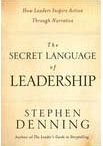
Steve Denning’s The Secret Language of Leadership

Secret_Language_Leadership.jpg

Update, as of Nov. 29: I believe many of the goodies associated

with the book release are still available.

Denning’s book is a centerpiece of “Stories Reveal the Soul of Companies” by Barbara Rose.

Steve Denning’s new book The Secret Language of Leadership:

How Leaders Inspire Action Through Narrative (Jossey-Bass)

was released on October 15, 2007. I’m one of the

folks offering bonus gifts for those who buy the book (see below).

Here’s what other leadership experts have said about the book:

Financial Times: “If business leaders do not immediately

grasp the vital insights offered by this book, both they and their

organizations are doomed.”– Stefan Stern, Financial Times,

August 29, 2007.

Jim Kouzes: “I highly recommend you get it today and

read it tonight. Tomorrow will be an entirely different

kind of day if you do. –Jim Kouzes, Co-author of

the best-selling, The Leadership Challenge and A Leader’s

Legacy

James MacGregor Burns: “I don’t think I have ever read a more

compelling preface. And best of all, the advice Denning

gives to the reader about speaking and writing is exemplified

in the way he has written this impressive book.”

–James MacGregor Burns, Author of Leadership

Larry Prusak: “Engaging and erudite, this book draws on very wide

reading and research to help any leader or manager master

the arts of narrative in a way that is both pragmatic and

original.”

–Larry Prusak, Co-author, What’s the Big Idea? and Working Knowledge

To celebrate the launch of the book on Oct. 15, I joined

with Steve and other colleagues, including Larry Prusak,

Jim Kouzes, Seth Kahan, Kevin Eikenberry, Steven Sonsino,

Rob Cross Annette Simmons, Chip Heath, Katalina Groh,

Madelyn Blair, Cliff Atkinson, Shawn Callahan, Svend-Erik Engh,

Lori Silverman, Stan Garfield, and the International Leadership

Association — in offering to purchasers of the book an impressive

array of supplementary bonus tools on leadership, storytelling and

knowledge management, at no additional cost to you.

Here’s how to take advantage of the offer:

you can get the book and all the supplementary leadership tools,

at:

http://www.stevedenning.com/launch.html

Check it out. I think you’ll find this offer

of considerable interest.

PS. Feel free to share this offer with friends and colleagues.

See the list of bonus gifts in the extended entry.

BONUS GIFTS (some may no longer be available)

LEADERSHIP TOOLS

  • Bonus Tool #1: Jim Kouzes – What’s old, what’s new,
    in leadership? (35 minutes ; MP3)
  • Bonus Tool #2: Chip Heath – How to make ideas stick
    (25 minute interview; MP3)
  • Bonus Tool #3: Larry Prusak on Conversation (60 minutes MP3)
  • Bonus Tool #4: Kevin Eikenberry: 101 Ways To Be A
    Remarkable Leader (6 pages)
  • Bonus Tool #5: Katalina Groh: Ben Zander and The Art of
    Possibility (streaming video)
  • Bonus Tool #6: Seth Kahan’s legendary jumpstart storytelling
    methodology (8 pages)
  • Bonus Tool #7: Proceedings from the ILA leadership conference in
    November 2006 (CD-ROM)
  • Bonus Tool #8: ILA interview with Harsh Verma (5 pages; pdf)
  • Bonus Tool #9: Rob Cross: Managing the Energy that Drives
    Innovation (20 pages)
  • Bonus Tool #10: Dave Zinger: Change On A Page (1 page, PDF)
  • Bonus Tool #11: Tony Quinlan: Mythology, Leaders and
    Leadership (25 pages)
  • Bonus Tool #12: Steven Sonsino & Jacqueline Moore: The
    Seven Failings of Really Useless Leaders (25 page pdf)
  • Bonus Tool #13: Daniele Chauvel & Stefane Gee: Leadership
    en francais (50 percent discount on Paris workshop)

NARRATIVE TOOLS

  • Bonus Tool #14: Annette Simmons: Building Trust Several Stories High (13 pages)
  • Bonus Tool #15: Cliff Atkinson: Getting Started with
    Beyond Bullet Points (28 pages)
  • Bonus Tool #16: Lori Silverman: 5 Sides To Every Story:
    Which Are You Missing? (5 pages)
  • Bonus Tool #17: Shawn Callahan: The Ultimate Guide to Anecdote
    Circles (32 pages)
  • Bonus Tool #18: Richard Stone: The Healing Art of Storytelling
    (autographed copy)
  • Bonus Tool #19: Katharine Hansen: Storytelling That Propels
    Careers (10 pages)
  • Bonus Tool #20: Svend-Erik Engh – Guide to becoming a better
    storyteller (9 pages)
  • Bonus Tool #21: Randy Dipner: Telling the compelling technology
    story (9 pages)
  • Bonus Tool #22: Larry Johnson: How Storytelling in School
    Creates Successful Leaders (63 minute podcast)
  • Bonus Tool #23: Rachel Carey DeBusk et al: Sharpening Your
    Culture Quotient (4 megs pdf)
  • Bonus Tool #24: Connie Ingram: Mentoring in the Mirror
    (5 page article)

KNOWLEDGE MANAGEMENT TOOLS

  • Bonus Tool #25: Stan Garfield: 36 Useful Maxims for
    Knowledge Sharing (2 pages)
  • Bonus Tool #26: Steve Denning The hidden side of KM: Risk
    management (27 pages)
  • Bonus Tool #27: Steve Denning: What is knowledge management?
    (20 pages)

COACHING AND MENTORING SESSIONS;

  • Bonus Tool #28: Madelyn Blair: Coaching session
    to keep your knowledge fresh (1 hour)
  • Bonus Tool #29: Svend-Erik Engh: Telephone coaching
    session in storytelling (1 hour)
  • Bonus Tool #30: Michael Margolis: Crafting the right story for
    innovation (1 hour)
  • Bonus Tool #31: Connie Ingram: On-line coaching session
    (1 hour)

STEVE DENNING’S BONUS TOOLS

  • Bonus Tool #32: Steve Denning’s leadership exercises
    and templates (15 pages)
  • Bonus Tool #33: Steve Denning’s implementation tips and tricks:
    (90 minutes: MP3)
  • Bonus Tool #34: Steve Denning’s DVD in Streaming video:
    Mastering the Springboard Story: (54 minutes)
  • Bonus Tool #35: Steve Denning reads the Preface to The Secret
    Language of Leadership
  • Bonus Tool #36: Ten Minutes That Helped Change The World Bank (slides)

National Day Diary Project

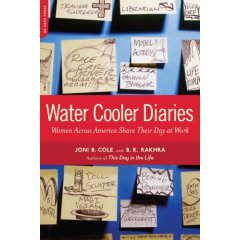
Update: Above are the books that have come out of Joni Cole’s Day Diary project. I submitted an entry on March 27, 2007, my birthday, and Joni was kind enough to send me a birthday greeting. The book from the 2007 project is The Watercooler Diaries (my submission wasn’t chosen), while the other is from a similar project in Jun 2003.

The makers of Lady Speed Stick® 24/7 and author Joni Cole of the series This Day in the Life: Diaries from Women across America are partnering on the first National Day Diary Project. Joni Cole was having a bad day when she conceived the idea for the This Day in the Life book series. Trying to deal with a serious illness in her family, job woes and a child who refused to wear socks in the winter, she wondered if anyone else was feeling so low. What were other women doing and feeling and thinking on the very same day? And so This Day in the Life was born out of self-pity, curiosity and a need to connect.

Submissions for the March 27 diary date can be entered online from March 27-April 6, 2007, to qualify for a chance at publication.

I submitted a diary entry on March 27 because it happens to be my birthday!

You can read more about the diary project here

Plotting the Story of Your Ideal Career

Here’s an article I recently wrote for Quint Careers:

If you’re confused about what to do with your career — or what to do next with your career — and you haven’t gained insight from taking assessments , there is another way. You can learn more about yourself, gain insight into the best career for you, and plot out how to get there through creating stories.

A small but growing collection of research, for example, has looked at using story and narrative in career counseling. “Psychotherapy is based on the premise that we each create our own life story from the time we are born,” wrote Jack Maguire in The Power of Personal Storytelling. Career counselors are increasingly using narrative approaches to encourage clients to build their career stories.

Authors Christensen and Johnston suggested in the Journal of Career Development that developing narratives can significantly help individuals to know what to emphasize in their career planning. They proposed that counselors perceive clients as both authors and central characters in their career stories, which they are “concurrently constructing and enacting.” Constructing their career story, the authors said, enables clients to discover connections and meaning in their careers that they might not have otherwise. When individuals imagine their desired future stories, they facilitate their belief that their storied, envisioned future will play out in reality. The authors’ research indicated that, indeed, clients who could tell these future stories tended to be “more effective in bringing those plans to fruition,” while Maguire characterized the narrative-therapy process as revising or replacing negative stories with positive ones.

Instead of answering the question traditionally explored in career counseling, “Who am I?” by listing traits such as interests, skills, aptitudes, and values, narrative approaches articulate the job-seeker’s preferred future. Larry Cochran, who has devoted an entire book to the use of narrative in career counseling, notes that the narrative approach emphasizes “emplotment,” which refers to how a person can cast himself or herself as the main character in a career narrative that is meaningful, productive, and fulfilling. Plotting out a career story can also help a person conceptualize the steps needed to attain his or her desired career, remind the narrator of career goals, and enable him or her to stay on track in achieving the envisioned career.

Following are a number of approaches to exploring your career desires and passions through storytelling. Considerable overlap exists among these story exercises, so don’t feel you need to use all of them. But pick a couple that resonate with you and use them to examine meanings, themes, and patterns in your career to date, as well as to plot out how to attain your career dreams.

  • Write the story of what you wanted to be when you grew up. Talk about what attracted you to you childhood dream career and how that attraction may have changed over the years. Discuss how your ambitions have evolved. Have you looked up to role models — people working in your dream career whom you wanted to emulate, people who inspire you? Include them in your story.
  • Tell the story of how you chose your current career. What attracted you to this career? Who were your influences? In what ways has your career met or failed to meet your expectations?
  • Chronicle your career to date, particularly noting internal factors — behaviors, motivations, and attitudes, such as what you’ve liked and disliked about each job. Discuss what you learned in each job that you decided to apply to your next job. For example, I discovered at about mid-career that I was a pretty good manager, but only on a small scale. I did not excel when charged with managing a large staff and knew that I should avoid large-scale management in future jobs. Identify the common threads, patterns, and plot lines in your career story. What have you valued the most in each of your jobs? How can you interpret the meaning of your past career in a way that provides a vision for the future?
  • Now, write the same story focusing on external factors that you felt were important, such as people and organizations. Source: Kerr Inkson.
  • Now, compose the story of the career you wish you’d had. What did you do in this fantasy story that you wish you had done in reality? What training or education did you pursue, and what experience did you attain? What’s stopping you from implementing this fantasy career path? How can you reinvent your career based on this fantasy?
  • Recall the story of your best job. What made it such a great job? Why did you leave? What did you learn?
  • Compose a story about the proudest accomplishment of your working life. What makes this achievement such a source of pride for you? Did you attain the recognition you felt you deserved for this accomplishment?
  • Identify one positive and one negative personal career incident in detail. What did you learn from each of these incidents and how have they influenced your subsequent career? Source: Kerr Inkson.
  • Construct a story about your most difficult decision in leaving a job or changing your career. Why did you leave/change? What made the departure/change so hard?
  • Develop a story about what you’d like to change about your current employer. What would you need to change about your job and/or organization to make it a better fit for you? What would the organization and job be like in an ideal world?
  • Recall a story of coping with change that an organization you worked for underwent. What was most significant for you personally in undergoing your organization’s change(s)? What did you learned from undergoing change with your organization? Have you acquired or sharpened any skills as a result of going through change? If an employer were interviewing you for a new job or promotion right now, what story would you tell if asked to give an example that demonstrates your flexibility, adaptability, and ability to handle change?
  • Imagine you are being interviewed for a job, and the interviewer asks: “Tell me the story of why you have decided to move on from where you are.” What story would you tell? Source: Kerr Inkson.
  • Conduct an informational interview with someone whose career path you admire write the story of that path. Learn how to conduct an informational interview. Write about the aspects of this person’s career that reinforce what you already know, elements that surprise you, things you like, and things you dislike about the interviewee’s career. Ask yourself these questions and include the answers in your story:
    – What did you learn about yourself?
    – What did you learn about what you value in a job and in a workplace?
    – What did you learn about how to break into your interviewee’s career field?
    – What did you learn about how to succeed in this field?
    – How do your skills/grades/experiences measure up to what’s required for entry or success in this field?
    – Have your ideas about pursuing this field changed now that you know more about it?
    – If you still want to pursue your original career direction, what is your strategy for seeking a job in this field?
    – If you have decided against your original field, what fields are you now considering, and how will you go about finding out if another field suits you better?
  • Initiate a similar story exercise with a written career story, such as one from Po Bronson’s What Should I Do with My Life? The True Story of People Who Answered the Ultimate Question, or Nobodies to Somebodies by Peter Han, stories of how “100 great careers got their start,” or Real People Real Jobs: 40 People Tell Their Stories by David Montross, Zandy Leibowitz, and Christopher Shinkman. Answer the same reflective questions as in the previous item.
  • Try the same story exercise with one or both of your parents. You may gain additional insights into your own career path. A parent’s career story can reveal surprises, as well as explanations of the family dynamic or influences into your own career. Source: Kerr Inkson.
  • Picture yourself in your ultimate career. Maybe you feel that obstacles — perhaps lack of credentials or experience — stand in your way of achieving this pie-in-the-sky career. But in your story, no such obstacles exist. What would it be like to wake up every morning excited about going to work? What kind of work would instill that kind of enthusiasm in you? Write about what a typical day is like, both during and after working hours. What are your job functions? What are the rewards of your job? What is your workplace like? What are you wearing? Who are your co-workers, clients, customers, and other people you come in contact with every day? What is your lifestyle like? Where do you live? Now, think about what it would take to bring this story to life. How could you achieve your dream? How could you overcome the obstacles?
  • Craft the story of “what you want to be.” Consider a story that tells what you want to stand for, how your work matters, and how you can make a difference. Source: Tom Peters.
  • Final thoughts
    If career assessments that yield lists of possible careers have left you cold, consider a story-based approach to career exploration. You just might be amazed at how much you can learn about yourself and how you can design your future through developing your story. As Kerr Inkson writes in Understanding Careers, “By interpreting the past, we use narrative to make sense of the present and thereby see a way to the future.” Remember also that crafting the story of your career is an ongoing exercise in that you will need to reconfigure the story to account for new occurrences in your career and life.

    Golden Fleece

    I’ll be presenting the popular audience version of my dissertation research at this conference this year:

    GoldenFleece 2007
    Successful story processes: From global to local

    The 5th Annual Conference on the Use of Story and Conversation in Organizations is planned for May 5, 2007, in the Washington, DC, area. This year, more than a dozen presenters will share tools, tips and techniques for using storytelling and conversation to accomplish organizational goals in organizations ranging from large, complex global business to a community-based not-for-profit.

    Larry Forster and Seth Kahan will tell the story of their work with Shell, a global group of oil, gas and petrochemical companies in its “connect-and-collaborate in a command-and-control world” initiative in which storytelling played a key role. They will present their approach to implementing complex change in the oil and gas industry including running a simulation of the methodology. Their approach relies on the participation and engagement of key stakeholders in the process.

    A local setting is the focus of a session presented by Tony Maione, President and CEO of United Way of Rhode Island and Lisa Hirsh. They will discuss their experience in United Way and how it focused on stories of personal and organizational courage that are often pivotal moments in an organization’s life. Lisa will demonstrate how to elicit stories, and Tony will provide the stories right from his own experience. Learn how to ask the questions that help an organization hone in on the stories that exist within it to highlight the personal and organizational courage necessary to move strategy forward.

    Come and learn from Larry, Seth, Lisa, and Tony along with 10 other presenters the why, how and what of story and conversation in organizations. To see information on all the full day of sessions and register here.

    This conference is co-sponsored by Goldenfleece and KM Institute.

    More Story Quotes

    Just a miscellaneous addition to the collection:

    Storytelling is really about connecting with people in the moment of telling the story. It’s something that happens in a dialogue between the storyteller and the audience.

    – Lea Thau, executive director of The Moth, a collective of New York City writers, actors, and regular folk who gather to tell their stories three or four times a month. See this entry.

    Persuasion, Intuition, and Why We Need More Than Facts

    Steve Denning provides a good rationale for the disagreement with Mel Kleinman’s article on fact-based hiring that I voiced in this entry.

    Discussing his work on a chapter on changing minds in his forthcoming book (to be published by Jossey-Bass in September 2007), Denning writes in his newsletter:

    I looked into the … psychological literature on persuasion, and found that it was vitiated by a fixation on the mind as a “sequential information processor”, when it is obvious that most of our thinking is intuitive, associative and done in parallel, and most of our key decisions have a huge emotional component. It took me a while to figure out how all this stuff fits together. Finally, to pull it into focus, I included some very personal stories about occasions in my life where I had changed my mind — subjects I’ve never written about before.

    I end up with (a) three ways we change our minds; (b) four ways to persuade people to change; and (c) three basic principles of leadership.

    Bingo: “Most of our key decisions have a huge emotional component.” Mel Kleinman seems to think we can skirt that component and conduct hiring based on facts alone and linear, sequential decision-making.

    Still More Story Products

    I like collecting products related to storytelling because I think they illustrate the growing prominence of story in our lives and tend to focus on an aspect of storytelling I’ve become increasingly interested in — storytelling for individual growth, self-actualization, and creating a better future.

    Another one I spotted while Christmas shopping was the Story Teller Photo Book Creator by Epson.

    The Edge of Avalon site has reviews of a couple of story resources.

    I bought some “build your own autobiography” books at Christmastime, and while I found some of them disappointing, I see much potential.